

00Import
Essential Commodities
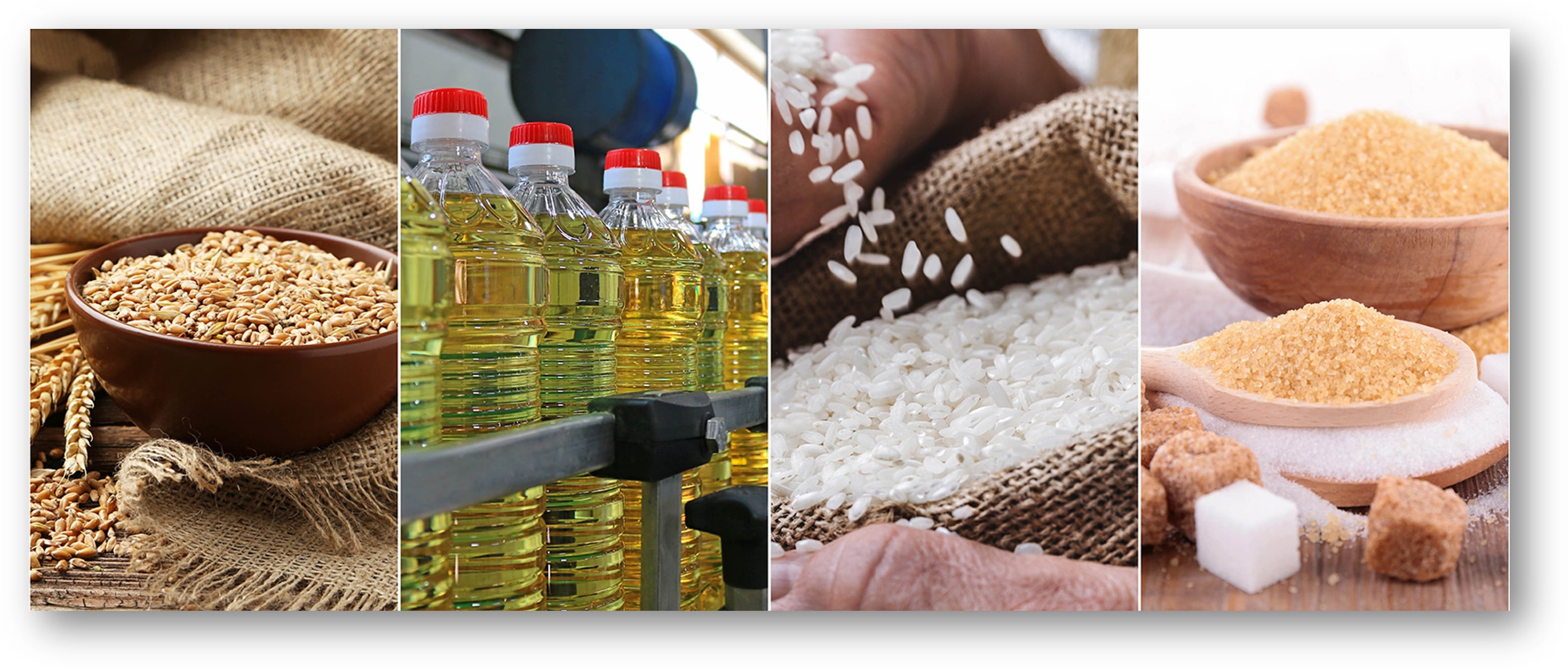
Sugar, rice, wheat and edible oil, bought at origin and landed in bulk.
ImportFood staples & bulk agricultural trade
01The trade
Bulk food staples — sugar, rice, wheat, edible oils, corn and urea — sourced from origin mills and refineries for wholesalers, processors and government procurement.
Essential commodities are the largest line the trade desk runs, and the one where the result is decided before the goods ever move: at origin, in the choice of mill or refinery and the grade contracted for. The division sources sugar, rice, wheat and edible oils both within Bangladesh and across international markets, supplying wholesalers, retailers, food manufacturers and government procurement bodies.
Volume is what makes the pricing work and origin relationships are what make the volume reliable. Partnerships are held with producers and exporters in more than one origin for each commodity, so a lane that closes — a crop that fails, an export duty that changes overnight — does not take the contract with it.
Every grade below is contracted against a written specification rather than a description. Sugar is bought to ICUMSA, oils to free fatty acid, moisture and peroxide limits, wheat to milling or feed grade. That specification is what pre-shipment inspection is checked against, and what the documents on arrival have to match.
Who buys it
- Wholesalers
- Supermarket chains
- Food manufacturers
- Institutional buyers
- Government procurement
- Importers and distributors
02The range
Core commodities
Each grade is contracted against a written specification. The published analyses for sugar and the four edible oils are set out below.
- Sugar
- ICUMSA 45 and other grades, for industrial and consumer use.
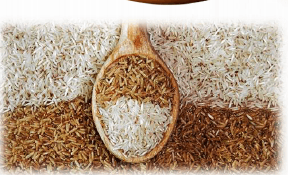
- Rice
- Parboiled, white and basmati, sourced from established mills and exporters.
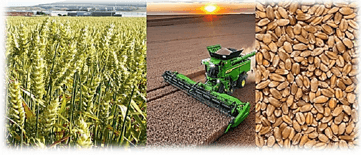
- Wheat
- Milling grade and feed grade — soft wheat from Russian and European origins.
- Soybean oil
- Crude, refined and crude degummed, for edible and industrial applications.
- Sunflower oil
- Crude and refined, Russian and European origin.
- Cooking oil blend
- Palm oil 70% with sunflower oil 30%, for the retail and food-service trade.
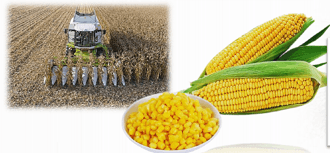
- Corn
- GMO and non-GMO Amarillo corn, offered in large wholesale lots or packed.
- Urea 45
- Kazakhstan origin.
Wheat
Rice
Corn

Soybean

Sunflower oil

Palm oil
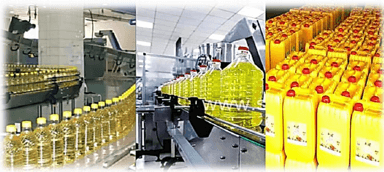
Refining & bottling
03Types of oil
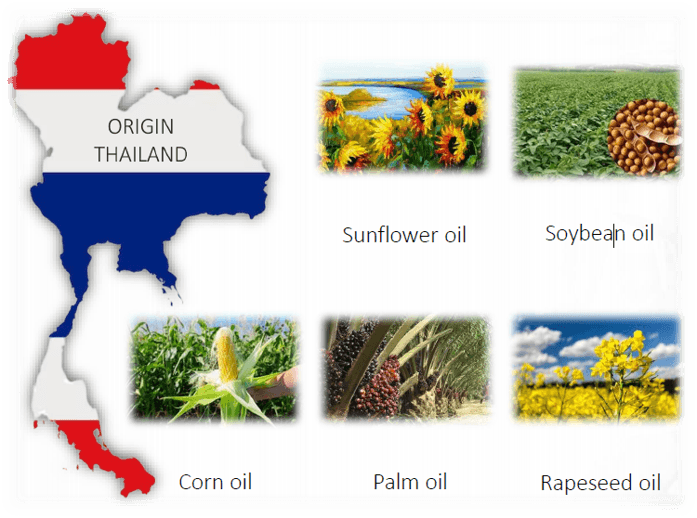
Five oils on a single origin.
A separate programme from the sunflower supply above: crude and refined oil out of Thailand, quoted by type. Analyses for four of the five are published further down.
- Sunflower oil
- Soybean oil
- Corn oil
- Palm oil
- Rapeseed oil
04Specification
Contracted against a figure, not a description.
Published analyses for the grades below. These are the figures pre-shipment inspection is checked against and the ones the documents on arrival have to match.
Sugar — ICUMSA 45
Technical characteristics of ICUMSA 45. Suitability for human consumption, Class “A”.
- Polarization
- 99.80° minimum
- Ash content
- 0.04% maximum by weight
- Moisture
- 0.04% maximum by weight
- Magnetic
- mg/kg 4
- Particles
- 100% dry & free flowing
- Solubility granulation
- Fine standard
- ICUMSA
- 45 RBU ICUMSA, attenuation index units method #10-1978
- Max As, max Os
- 1 p.p.m.
- Max Cu
- 2 p.p.m. : 3 p.p.m.
- Colour
- Sparkling white
- Sediments
- None
- SO
- mg/kg 20
- Reducing sugar
- 0.010% maximum in dry mass
- Radiation
- Normal, without presence of caesium or iodine. SO₂: certified
- Substance
- Solid, crystal
- Smell
- Free of any smell
- HPN staph aureus
- Per 1 gram — nil
- Microbiological limits
- Pathogenic bacteria including salmonella per 1 gram — nil. Bacillus per 1 gram — nil
- Pesticide traces
- Maximum mg/kg basis — DDT 0.005, photoxin 0.01, hexachloran-gamma isomer 0.005
- Crop
- 2024 or more recent crop
Sunflower oil — refined & crude
Product analysis.
- Specific density (at 20°C)
- 0,918 – 0,920
- Refractive index (at 40°C)
- 1.467 – 1.469
- Transparency of oil, max
- 10 fem
- Acidity, mg KOH % gm oil max
- 0,1 – 0,6
- Peroxide value, mMol/kg oil max
- 0,1 – 0,7
- Colour value iodine, mg max
- 4
- Iodine value (WIJS)
- 110 – 144
- Moisture & volatile, % max
- 0,06
- Saponification value, mg KOH/gm oil
- 188 – 194
- Phosphorus containing matter (P₂O₅)
- Negative
- Non-fatty impurities, % max
- Negative
- Colouring materials
- According to the international standards
- Artificial flavours
- According to the international standards
- Anti-oxidants
- 200 mg/kg, but galate not more than 100 mg/kg
- Preservative agent
- According to the international standards
- Anti-foaming
- 10 mg/kg
- Anti-crystallization
- 1250 mg/kg
- Soap content
- 0,005 max
- Insoluble impurities, % mass
- 0,5 max
Sunflower oil — at loading
Test methods and limits applied at the point of loading.
- FFA (%), NEN-EN-ISO 660
- max 3.0
- Moisture (%), NEN-EN-ISO 662
- max 0.5
- Impurities (%), NEN-EN-ISO
- 663
- Colour Lovibond (5¼ inch), NEN
- 6308
- Peroxide value at loading (meq/kg), NEN-EN-ISO
- 3960
- Relative density at 20°C, NEN
- 6311
- Iodine value (g 12/100g), NEN-EN-ISO
- 3961
- Flash point
- Min 121°C
- Microbiological safety
- Oil does not contain water, so micro-organisms cannot grow. As long as the packaging stays closed, contamination is not an option.
Soybean oil — refined, crude & crude degummed
Product analysis.
- FFA (as oleic, molecular weight 282)
- Basis 1.00%, maximum 1.25%
- Lecithin (expressed as phosphorous)
- Basis 0.020%, maximum 0.025%
- Sediment (Gardner break test)
- Maximum 0.10%
- Impurities (insoluble in petrol ether)
- Maximum 0.10%
- Moisture and volatile matter
- Maximum 0.20%
- Unsaponifiable matter (per N.S.P.A.)
- Maximum 1.50%
- Colour (Lovibond cell 1 inch)
- Basis: not darker than 50 yellow plus 5 red
Soybean oil — at loading
Test methods and limits applied at the point of loading.
- FFA (%), NEN-EN-ISO 660
- max 0,1
- Moisture (%), NEN-EN-ISO 662
- max 0,05
- Impurities (%), NEN-EN-ISO 663
- Negative
- Colour Lovibond (5¼ inch), NEN 6308
- 15Y, 1,5R
- Peroxide value at loading (meq/kg), NEN-EN-ISO 3960
- max 1.0
- Relative density at 20°C, NEN 6311
- 0,91 – 0,93
- Iodine value (g 12/100g), own method
- 125 – 140
Corn oil — refined & crude
Product analysis.
- Fatty acids (F.F.A.)
- 0.1
- Specific gravity (25°C)
- 0.915 – 0.922
- Moisture
- 0
- Unsaponifiable
- 2.0 max
- Impurities
- 0
- Saponification value
- 187 – 193
- Peroxide value
- At the time of loading, max 1
- Refractive index (25°C)
- 1.47 – 1.474
- Iodine number
- 103 – 128, odour deodorised
- Titre
- 14 – 20, taste bland
Corn oil — specification
- FFA (as oleic)
- 3% max
- Moisture / impurities
- 0.5% max
- Refraction index
- 1.4719 – 1.4740 @ 25°C
- Iodine index
- 120 – 144
- Saponification number
- 187 / 192
- Non-saponification matter
- 1.0% max
- Soluble in petrol ether
- 0.1% max
- Sediment
- 0.3% max
- Flash point
- 121°C min
- Peroxide
- 2.0 meq O₂/kg
Palm oil — refined & crude
Product analysis.
- Free fatty acid
- Max 0.1%
- Moisture
- Max 0.1%
- Iodine value
- Min 56 WIJ’s
- Slip melting point
- Max 24°C
- Colour (5.25″ LBD)
- Max 3R
- Cloud point
- Max 10°C
- Appearance
- White to pale yellow, solid to semi-solid lard-like fat
- Flavour and odour
- Bland, odourless
Palm oil — specification
- FFA (%)
- Max 0.10
- Moisture & impurities
- Max 0.10
- IV
- 48 – 56
- Melting point
- 38
- Oxidative stability
- Min 12
- Density, 20°C
- 912 kg/m³
- Density, 50°C
- 892 kg/m³
- Flame point
- 360°C
- Flash point
- 320°C
- Viscosity, 50°C
- 28 mm²/s
- Cetane number
- 50
- Caloric value
- Min 37000 kJ/kg
- Sulphur
- 3 mg/kg
- Phosphor
- 1.6 mg/kg
- Carbon residue
- 0.30 wt.%
05Packaging
Bulk, big-bags and flexitanks.
How a commodity is packed decides what it costs to move and who can receive it. The mode is agreed with the discharge point, not assumed from the order size.
Bulk vessel
Whole cargo holds for grain, sugar and fertiliser, discharged at the receiving port.
Flexitank
A lined bladder inside a standard container, for edible oil moving in container lots rather than parcel tanker.
IBC tote
Intermediate bulk containers, for oil going to a blender or processor in smaller quantities.
Big bag / FIBC
Bulk bags for sugar, corn and urea, handled by forklift at both ends.
Road tanker
Bulk discharge direct to a refinery, blending plant or bottling line.
Retail packs
Bottled, tinned and pouched cooking oil, under a brand or a buyer's own label.
06Certifications
What the supply is certified against.
Standards the commodity supply is certified against, as published in the division's trade portfolio. Certification sits with the producing mills, refineries and packers — it is what the goods are certified to, not a claim about the trading desk.
GACC registration
72422000185
- Halal
- ISO 9001
- ISO 14001:2015
- OHSAS 18001
- FSSC 22000 — Food Safety System Certification
- BRC Food
- IFS Global Markets Food
- GLOBALG.A.P.
- Genesis Standards
- Certified Humane
- ALO Free
- SGS system certification
07How the desk works
Five things happen to every order.
- Sourcing & procurement
- Direct from producers, mills, refineries and manufacturers, rather than through a chain of intermediaries each taking a turn.
- Quality assurance
- Contracted against a written specification and checked against that specification before shipment — not described, measured.
- Logistics & freight forwarding
- End-to-end movement, handled by Triple S Logistics inside the group rather than tendered out to a third party.
- Customs & documentation
- The paperwork that clears the goods at both ends, prepared before they move rather than chased after they arrive.
- Market intelligence
- Price trends, supply-side risk and what is actually available this season, which is often a different question from what is listed.
Why this desk
- Global network
- Partnerships with established suppliers and buyers across the markets the division trades in.
- Competitive pricing
- Bulk purchasing and direct sourcing, rather than a margin applied on top of someone else's margin.
- Timely delivery
- Group freight capability, so the shipping is not a second negotiation with a stranger.
- Customer-centric approach
- Long-term relationships built on trust and transparency.
- Compliance & integrity
- Strict adherence to contractual and ethical standards.
08Terms
Instruments accepted, and what each one means.
Banking instrument confirmed, irrevocable, transferable and divisible, issued by a top-25 bank. Auto-rotating, duration 12 months and above. All payment methods and MT103.
- DLC / MT-700
- SBLC / MT-760
- ARDLC / MT-700
- SBLC FULL / MT-760
- LC CASH BANK
- DLC / LC
- Renewable month after monthPayment according to the price list at the point of departure.
- SBLC
- Renewable month after monthFour-month warranty, renewable payment upon arrival.
- LC Cash Bank
- Renewable month after monthFour-month warranty, revolving payment in the country of origin.
- SBLC Full 25%
- Renewable month after monthGuarantee 25% of the total cost.
Markets we serve
- Domestic
- Wholesalers, supermarkets, institutional buyers and food processors in Bangladesh.
- International
- Importers and distributors in Asia, Africa and the Middle East.
09Also traded
Import
- 01Essential CommoditiesYou are here
- 02Industrial Machinery & Handling EquipmentPlant machinery & materials handling
- 03Construction Heavy MachineryEarthmoving, lifting & site plant
- 04Industrial ChemicalsProcess, treatment & textile chemicals
- 05Cosmetics & ToiletriesPersonal care & household consumer goods
- 06Medical & Diagnostic EquipmentHospital, laboratory & diagnostic equipment
→Send a requirement
Essential Commodities enquiries, in one line or a full schedule.
Quantity, specification and the port it has to reach. An incomplete enquiry is still worth sending — working out exactly what is being asked for is part of the job.
Or call +88 09613828181